
Podcast: The Rocky Mountain Writer
October 16, 2018 § Leave a comment
 What a pleasure it was to spend part of a recent afternoon having this wide-ranging conversation with Colorado novelist Mark Stevens on The Rocky Mountain Writer podcast.
We discussed many topics of interest to writers and readers, including A Field Guide to Murder & Fly Fishing, travel and fiction, Ecuadorian volcanoes, Venezuela’s Orinoco basin, Eastern Cuba, fiction vs autobiography, the importance of place in fiction, dropping acid and pushing the bounds of objective reality, interiority and loneliness, The Grateful Dead and the Eleusinian Mysteries, fly fishing as metaphor, Ursula K. LeGuin, William Golding’s The Inheritors, Newport MFA & the Cuba Writers Program, and a recap of a talk I gave on “The Essentials of Voice” at RMFW’s Colorado Gold conference in September, 2018.
Listen to the entire podcast here. Mark also did a wonderful followup print interview here, in which we talked about life experience as a point of departure for fiction, the deep sources of story ideas, more on why I think dreams and hallucinations shouldn’t be off-limits for fiction writers, place-based writing as a response to environmental crisis, the challenge of endings, some of my favorite writers, and more. Enjoy!
Back to Tierra del Fuego and Patagonia
November 2, 2017 § 2 Comments
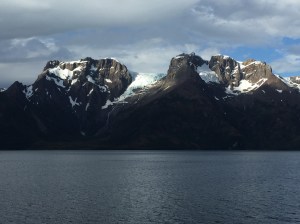 It’s been a few years, and I’m thrilled to be returning to one of my favorite regions on the planet with National Geographic Expeditions’ Exploring Patagonia program. This season I’m slated to accompany two trips: one in November, 2017 and a second in January, 2018. We’ll be cruising through Tierra del Fuego in a small, expertly crewed, Chilean-owned ship, the M.V. Stella Australis. We’ll embark from Ushuaia, the world’s southernmost city, round Cape Horn, and make our way up through the Magdalena Passage and the Agostini Sound, taking advantage of daily Zodiac landings to explore Hornos Island, Wulaia Bay, glaciers, and penguin colonies. Fantastic!
 The Stella Australis will then drop us off in Punta Arenas, Chile, and we’ll head up to the stunning wilderness of Torres del Paine, where we’ll have daily opportunities to wander, both on foot and horseback. We can expect to see guanaco, rhea, Andean condor, many other bird species, and possibly even a puma or two. But it’s the vastness and sublime beauty of these wilderness landscapes that is the true highlight here. This part of the world is one of the least densely populated on earth, and it’s never short of inspiring!
 I’m excited to be leading the educational aspects of the program in my role as National Geographic’s “featured expert.” Other than informal group interactions the main element of this task is to give a series of illustrated talks: an intro to the history and geography of the region; Charles Darwin and the Voyage of the Beagle; American artist and adventurer Rockwell Kent; Ivon Chounard, Douglas Tomkins and “los Fun Hogs.”
 I’ll also be giving a brand new talk that I’m thrilled to debut in Patagonia, in which I’ll attempt to make sense of the links between travel, fiction, place-based writing, all in the context of this strange hybrid career of mine.
If you’re signed up for either of these trips, I look forward to traveling with you. If not, stay tuned: there are likely to be similar opportunities in the future!
New Cuba/writing essay up at Cleaver
June 2, 2017 § Leave a comment
 “The blackout was a revelation. It happened at around eight PM, in Trinidad, Cuba, on one of those moonless tropical nights that fall so suddenly you barely notice the dusk. This was several years ago—before the loosening of travel regulations that occurred under President Obama—and the number of American tourists remained small . . . At the time of the occurrence described in this essay, I was traveling to the country with cultural tourism groups at least half a dozen times a year.”
Click here to read the full essay.
New interview up at Fiction Writers Review
May 8, 2017 § Leave a comment
 Really enjoyed this wide-ranging conversation with the perceptive Art Hutchinson at Fiction Writers Review. We discussed, among other things, extreme sports, the supernatural, foreign and historical settings, pushing the boundaries of conscious perception, and why the inner landscape is something fiction can do better than any other art. Read the whole interview here!
Two new articles on the writing craft
April 9, 2017 § Leave a comment
 “As a species, we’re ruled and dominated by our over-developed hominid imaginations. Setting is what propels us into the dream of story, because its lucidity — its sensory concreteness — activates our imaginations on a subconscious level, irresistibly, without our knowledge or permission.” — from “Research Notes: A Field Guide to Murder & Fly Fishing,” an illustrated meditation on place and the writing process at Necessary Fiction
“We read novels and stories for distraction, for entertainment, yet the best fiction also gives us something life itself cannot: direct exposure to the internal life of another human being. It is this unique backstage access that makes good fiction more immersive and emotionally gripping than any other narrative medium.” — from “What Are Writers For? A Fiction Writer’s Perspective,” at GrubWrites.
Vermont Public Radio Interview
April 7, 2017 § Leave a comment
 “What I was trying to do was first of all just to tell a good story.”
Really enjoyed my recent conversation with Vermont Public Radio’s Mitch Wertlieb! We discussed writing, fly fishing, avalanches, the Grateful Dead, and other topics related to my newly released short fiction collection, A Field Guide to Murder & Fly Fishing.
 Here’s a link to the podcast and transcript of the interview. Have a listen if you’re curious: the whole thing is just under seven minutes long. And here’s a link to the collection, which can be purchased at Amazon, B & N, or by request from your favorite local bookstore!
Hemingway’s Ghost in Havana at The Millions
March 21, 2017 § Leave a comment
 New essay up up at The Millions, in which I trace Hemingway’s 30 year love affair with Havana and try to get to the bottom of what his lingering influence says about both the writer and the city. Read the whole thing here. A brief excerpt:
In Havana, Ernest Hemingway’s restless ghost lingers more palpably than in any of the other places in the world that can legitimately claim him: Paris, Madrid, Sun Valley, Key West. Havana was his principal home for more than three decades, and its physical aspect has changed very little since he left it, for the last time, in the spring of 1960.
I’ve been traveling to the city with some regularity since 1999, when I directed one of the first officially sanctioned programs for U.S. students in Cuba since the triumph of Fidel Castro’s 1959 Revolution. As an aspiring novelist, I’ve long been interested in Hemingway’s work, but I had no idea how prominently Havana figured in the author’s life — nor how prominently the author figured in the city’s defining iconography — until I began spending time there.
Advance praise & early reviews: A FIELD GUIDE TO MURDER & FLY FISHING
February 17, 2017 § 4 Comments
 Deeply honored by these early reactions to my forthcoming short fiction collection, which launches officially on April 7, 2017. Excerpts linked to full reviews:
“From the mountain lakes of the Colorado Rockies to cobbled streets of Spain, this fascinating collection of short stories by Vermont-based writer Tim Weed (Will Poole’s Island) never disappoints. The stories are more about choices than they are about fly fishing or murder, but time and again Weed’s vivid characters in these thirteen tales of dark adventure are forced to confront a vision of themselves—or others—that’s not quite as positive as they’d hoped . . . A Field Guide to Murder and Fly Fishing is a collection you’ll be happy to get lost in.” Julie Reiff (full review at Ploughshares).
“Tim Weed’s A Field Guide to Murder & Fly Fishing is a fiction collection of the first order. I found myself parceling out the stories to make them last. These are stories that will live a long time both on the page and in your heart.” —Joseph Monninger, author of The World as We Know It.
“In his first short story collection, novelist Tim Weed shows his stunningly impressive range—transporting readers from the heights of the Andes and the depths of the Amazon to the backstreets of Rome and Granada. Many of Weed’s stories have a hint of the mysterious, even the supernatural, but they are all grounded in sharply-rendered material worlds so fresh one feels one might step directly into the literary photographs he has created and stroll around for a while. A top-notch debut, not to be missed.”—Jacob Appel, author of Einstein’s Beach House (full review at Goodreads)
“Each story is a jewel, cracking open what matters most: love, family, and our big beautiful planet.” —Ann Hood, author of The Book That Matters Most
“A Field Guide to Murder & Fly Fishing is more than a collection of adventure stories. It is a significant and moving collection of ideas, snapshots, and visions that leave a lasting impression . . . Never predictable, this collection is a must for travelers, adventure seekers, and anyone who cares to examine the depth of [Weed’s] varied and flawed characters.” —Ron Samul (full review at We Are the Curriculum)
Stay tuned for the official announcement of the April 7, 2017 release on Facebook, Twitter, LinkedIn, and the email newsletter. No need to wait though! Pre-order the collection at Amazon or Barnes & Noble.
Back to Havana at a momentous time
November 26, 2016 § Leave a comment
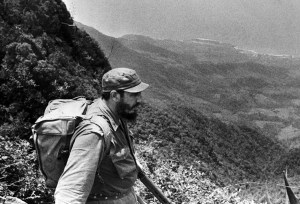 This morning we have the news that Fidel Castro has passed out of this world. Whatever you think of his policies there can be no question that he was one of the most colorful and important world-historical figures of the 20th century. I’m heading to Havana in a few days, traveling with a small group put together by the Brattleboro Museum & Art Center. One of the things I’ll be doing is giving an illustrated lecture about the history of the Cuban Revolution. I’m sure we’ll be talking quite a lot about Fidel, both with among my fellow travelers and with Cubans. It will be a very interesting time to be there.
 Historical moment aside, I’m extremely happy to be heading back to the island of Cuba. It’s been several months, and it will be great to check in with old friends, breathe the tropical air, reconnect with the familiar sights and smells and sounds. And yes, it will be be a welcome relief to make a quick escape from social media and the constant reminders of our new electoral reality. In this context, nine packed and fascinating days away sound pretty good. We’ll be in Havana, Cienfuegos, and Trinidad, with highlights including Hemingway’s house at Finca Vigía, world-class traditional music everywhere but especially on the steps in the main square of Trinidad, a few special paladares, and visits to certain unspoiled regions on and near the southern coast.
 Particularly looking forward to visiting the old sugar central of Soledad (near Cienfuegos), the site of some fascinating research I’ve been doing on Edwin Atkins, a Bostonian sugar planter who was the largest foreign property owner during the war of 1895-98 and an influential adviser to both the Cleveland and the McKinley administrations. Atkins’ old mansion still stands, and I’ve played a small role in the process of a local initiative to restore and conserve the house and to create a new museum.
If you’re looking for ways to get to Cuba yourself during what may prove to be the short-lived window of the recent relaxation of U.S.-Cuba relations, don’t hesitate to send me a note. Happy to share my experience and reach out to essential contacts, or at least point you in the right direction. ¡Viva Cuba!
National Geographic Student Expeditions in Cuba
July 1, 2016 § 2 Comments
 Very excited to be participating in the first ever NatGeo student programs to Cuba. I’ll be starting out with the first group toward the end of their program in the province of Santa Clara, a few hours east of the capital, and then joining the second group for the beginning of their program in Havana. Traveling to Cuba, by now, feels something akin to going home for me. It’s been a few months, so I’m looking forward to checking in on the evolving situation!
 I’m also excited to be traveling with student groups, because leading student groups is how I spent most of my early career in educational travel. I relish the sense of adventure that usually arises within such groups—and in my experience NatGeo students are an exceptionally positive, creative, and intellectually curious bunch. It will be hot this time of year, but that’s nothing to worry about, as we’ll be on an island surrounded by crystalline blue water!
 Tim Weed