
Audiobook of Will Poole’s Island, small-group Cuba trips, and other news
September 3, 2020 § Leave a comment
| I’m thrilled to announce the impending release of a new audiobook of Will Poole’s Island—narrated by yours truly! It turns out that recording an audiobook is an exacting, time consuming process—but also a surprisingly enjoyable one. This slightly whimsical fish-eye photo taken by producer and sound engineer Reggie Martell in the spare room of my Vermont house that he converted into a sound studio doesn’t really do justice to how rewarding it was to re-immerse myself in that first published novel, a book that will always hold a special place in my heart. |
 |
| Years had passed since I’d last revisited Will Poole’s Island; there were moments when I felt like I was reading it for the first time. And I’m pleased to report, in my humble opinion, that the story holds up well, offering a rewarding temporary escape from the tense stretch of history we’re currently living. This is especially so thanks to Reggie’s professional expertise and the hauntingly beautiful original musical interludes composed by the talented ETC Kid. |
| The audiobook and Kindle e-book are set to be released on September 15, with a new edition of the paperback to follow in Spring ’21. If your interest is piqued, I encourage you to ORDER THE AUDIOBOOK NOW from Audible or the vendor of your choice. You’ll have my sincere gratitude. And I know you’ll enjoy listening to the novel! |

 | The last time I was in Havana was January, 2020, but it feels like fifty years ago! Very much looking forward to getting back next year. Care to join me? |
| As a place to visit Cuba is as interesting as ever, perhaps even more so given the effectiveness of the response to COVID-19. Unlike certain other countries in the world, the country has been used its excellent medical system and organizing capacity to good effect, keeping new cases of the pandemic limited. In fact my Cuban friends are constantly checking in to express their worries about how we’re all doing up north in the U.S.—which says quite a bit about the situations in our respective countries. |
| Depending on how things go, the next year or so looks to be an opportune time to revisit this fascinating country that I know and love so well. |  |
 | I’m considering putting together two or three small-group trips to Cuba, dates TBD, in winter/spring 2021, late fall 2021, and/or winter/spring 2022. |
| I’m also available to set up custom independent trips if you have a small group of family or friends that want to go. If either of these options is of more than casual interest to you, please send me a note with any thoughts on what your interests are in terms of trip content, and if there is a best time frame for you. |
| I’ll keep a careful list and update you specifically as I hear from people and actual trip dates begin to take shape. You can also bookmark this page, on which I keep an updated list of upcoming writing workshops, travel programs, talks, readings, and other events. |  |
 | Meanwhile, I hope you are holding up well, staying safe and healthy, and managing to enjoy life in all its varied moments! Please don’t hesitate to send me a note if you’d like to touch base in a more personal way. Warm wishes! |
Live-remote classes for writers with novels-in-progress
March 20, 2020 § Leave a comment
Working on a novel? Not too late to join me for these live-remote classes, part of Grub Street’s acclaimed Novel Revision Series!
 March 21, 2020. Genre, Concept, Premise, Theme – in which we’ll come up with answers to an essential question: What’s your novel-in-progress “about”?
 April 18, 2020. Dramatic Structure & Narrative Drive – in which we’ll explore the hidden structures common to all good novels and the secrets to creating a page-turning read.
Keep tabs on all my upcoming classes and events here.
New novel is a finalist for the William Faulkner-William Wisdom Award
September 9, 2019 § 3 Comments
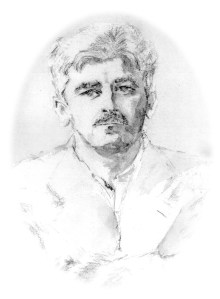 Just learned that my new novel, THE HAVANA STANDARD, has been selected as a finalist for the 2019 William Faulkner-WilliamWisdom Award for a Novel-in-Progress. The manuscript is currently being shopped around to acquiring editors, so fingers crossed . . .
Radio interview: The Round Schoolhouse & the legend of Thunderbolt
December 10, 2018 § 2 Comments

Very enjoyable conversation this morning with Olga Peters of the Green Mountain Mornings radio show on WKVT Radio 100.03 FM about the local landmark and the historical characters that inspired my novel-in-progress, The Confession of Michael Martin, one of fifteen works selected for the 2018 long list of the Historical Novel Society’s New Novel Award. HNS describes it as “A novel of adventure, friendship, and immigrant life inspired by the true story of early American outlaws that is intriguingly different from Hollywood mythologies.”

The history behind the story is also of local interest because it represents a landmark in early Vermont and Brattleboro publishing. It’s of general interest because it’s an early entry in the great American outlaw myth, and because of what it tells us about the power of narrative to grip the human imagination and about the blurred lines between what we call history and what we call fiction. I’ll be presenting the research in a roundtable discussion sponsored by the Brattleboro Words Project at 6pm this Thursday, December 13, at 118 Elliot Street in Brattleboro. If you’re in the neighborhood, please come by!
My heartfelt thanks to Lissa Weinmann of The Brattleboro Words Project and Olga Peters (feel better soon, Olga)!
Novel-in-Progress Long-listed for Historical Novel Society New Novel Award
August 21, 2018 § 4 Comments
 Pleased to note that the Historical Novel Society has named my novel-in-progress, The Confession of Michael Martin, to the Long List for their 2018 New Novel Award. This is a great honor, and I take it as a positive sign for the ultimate success of the book, which I’ve been working on for a number of years but very few people have read. The HNS listing reads, in part: “A novel of adventure, friendship, and immigrant life inspired by the true story of early American outlaws, intriguingly different from Hollywood mythologies.”
Will Poole’s Island named to list of Best Young Adult Historical Fiction Books
February 8, 2018 § Leave a comment
 Honored to be on this list, which also includes Laurie Halse Anderson’s Fever 1793, Christopher Paul Curtis’ Bud, Not Buddy, and Ann Rinaldi’s Numbering All the Bones. An excerpt of the review on Homeschooling Teen website, the list’s publisher:
“This novel has everything a teen could hope for in a historical fiction book, including elements of magic, a journey across the sea and enough conflict and suspense to keep the pages turning. Moreover, the novel provides excellent, although indirect, commentary on current events.”
Find out everything you need to know about Will Poole’s Island here.
A conversation about writing with James Scott of TK Podcast
August 29, 2017 § Leave a comment
 Really enjoyed my conversation with James Scott on the latest episode of his terrific series of literary conversations known as the TK Podcast. James is a bestselling novelist (The Kept) and an excellent interviewer, with a real knack for asking questions about writing and life that lead to interesting places.
We talked about travel, the writing life, the binary nature of solitude, National Geographic, short fiction, how to sequence stories in a short fiction collection, the Cuba Writers Program, Ingmar Bergman, drug writing, Green Writers Press, Denis Johnson, The Grateful Dead, Cormac McCarthy’s The Road, Paul Bowles, and much, much more. Highly recommended if you’re a writer and/or a fan of literary podcasts! Here’s the link.
LitHub piece on historical fiction featuring WILL POOLE’S ISLAND
April 24, 2017 § Leave a comment
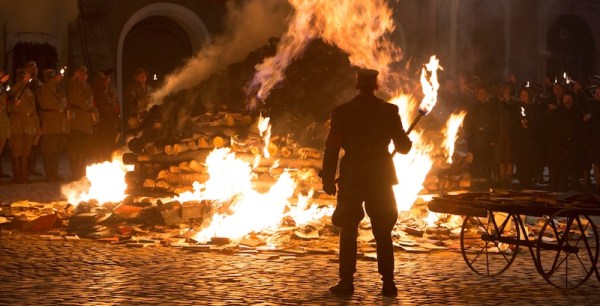 Take a look at Crystal King’s recent article at Literary Hub regarding the relevance of historical fiction to contemporary society. Crystal, the author of Feast of Sorrow, a gripping new novel on ancient Rome, makes some excellent points about the ways in which the visceral experience of history that comes from reading novels based in the past can inform our understanding of the present. The article also presents the perspectives of ten contemporary historical novelists in whose company I’m quite honored to be included, including Jenna Blum, Anjali Mitter Duva, Margaret George, Heather Webb, and Marjan Kamali. Our current political leaders would do well to read this one!
“Historical Fiction is More Important than Ever: 10 Writers Weigh In.”
Two new articles on the writing craft
April 9, 2017 § Leave a comment
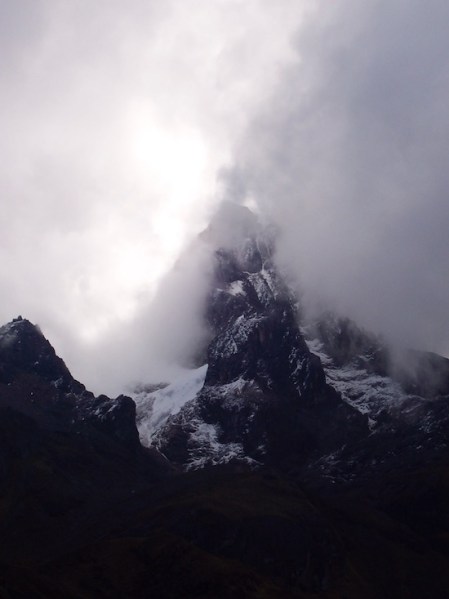 “As a species, we’re ruled and dominated by our over-developed hominid imaginations. Setting is what propels us into the dream of story, because its lucidity — its sensory concreteness — activates our imaginations on a subconscious level, irresistibly, without our knowledge or permission.” — from “Research Notes: A Field Guide to Murder & Fly Fishing,” an illustrated meditation on place and the writing process at Necessary Fiction
“We read novels and stories for distraction, for entertainment, yet the best fiction also gives us something life itself cannot: direct exposure to the internal life of another human being. It is this unique backstage access that makes good fiction more immersive and emotionally gripping than any other narrative medium.” — from “What Are Writers For? A Fiction Writer’s Perspective,” at GrubWrites.
Eight Novels to Prepare You for the End of Civilization at Talking Writing
March 21, 2017 § 1 Comment
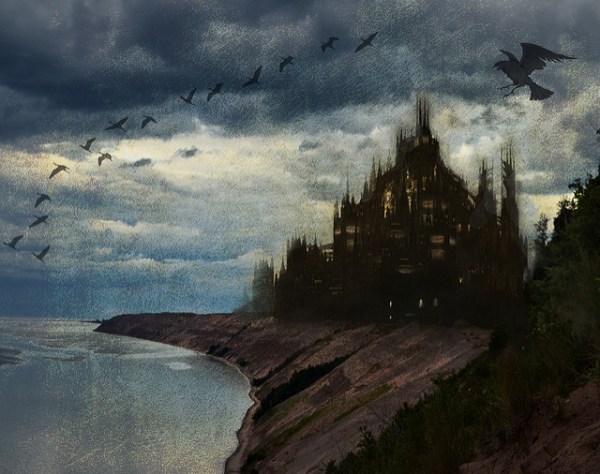 Yet another new article up, this one at Talking Writing. Here’s a quick excerpt:
Novels act like beacons in stormy weather. Even when they promise an escape from the daily onslaught, novels light a path forward in ways nonfiction can’t. They allow readers to live out life’s worst-case scenarios from within the safety of their own imaginations so that when something terrible actually happens—a personal tragedy, a natural catastrophe, a deadly plague—it’s not a complete surprise. As a reader, I’m an easy mark for dystopian and post-apocalyptic fiction, and I’m often struck by the unique way such novels deliver not only practical strategies for surviving the unthinkable but emotional strategies, too—which ultimately may be more important. It’s hard to overstate the solace good fiction can provide even in the darkest of times.
So, if you’re stocking the shelves of your survival shelter, don’t forget to throw in a few gripping novels. Here are eight that strike me as especially pertinent right now.
Read the full article here!

