
Landscape as Redemption in Leslie Marmon Silko’s Ceremony
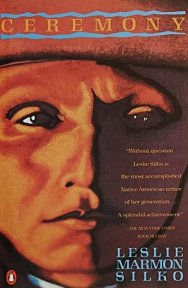 Ceremony is an ambitious, wise, and highly recommended novel by Native American writer Leslie Marmon Silko. The novel’s theme is redemption — of one man, and of an entire people — by way of a quest for a lost spiritual center.
There was a peaceful silence beneath the sound of the wind. It was the silence of hard dry clay and old juniper wood bleached white.
If the white people never looked beyond the lie, to see that theirs was a nation built on stolen land, then they would never be able to understand how they had been used by the witchery; they would never know that they were still being manipulated by those who knew how to stir the ingredients together: white thievery and injustice boiling up the anger that would finally destroy the world . . .
The witchery would be at work all night so that the people would see only the losses—the land and the lives lost—since the whites came; the witchery would work so that the people would be fooled into blaming only the whites and not the witchery. It would work to make the people forget the stories of the creation and the continuation of the five worlds; the old priests would be afraid too, and cling to ritual without making new ceremonies as they always had before . . .
Every day they had to look at the land, from horizon to horizon, and every day the loss was with them; it was the dead unburied, and the mourning of the lost going on forever. So they tried to sink the loss in booze, and silence their grief with war stories about their courage, defending the land they had already lost.
He was aware of the center beneath him; it soaked into his body from the ground through the torn skin on his hands, covered with powdery black dirt . . . It was pulling him back, close to the earth, where the core was cool and silent as mountain stone, and even with the noise and pain in his head he knew how it would be: a returning rather than a separation.
The dreams had been terror at loss, at something lost forever; but nothing was lost; all was retained between the sky and the earth . . . The snow-covered mountain remained, without regard to the titles of ownership of the white ranchers who thought they possessed it. They logged the trees, they killed the deer, bear, and mountain lions, they built their fences high; but the mountain was far greater than any or all of these things. The mountain outdistanced their destruction, just as love had outdistanced death.


 Tim Weed