
Two new reviews: A FIELD GUIDE TO MURDER & FLY FISHING
April 24, 2017 § Leave a comment
Honored to notice the release of two new reviews of A Field Guide to Murder & Fly Fishing. I found these particularly gratifying because they zero in on two specific stories in the collection:
Seven Days takes a unique approach in a piece called “Page 32: Short Takes on Five Books by Vermont Authors,” excerpting a quote from page 32 of each book and using that as a jumping-off point for a brief review. For A Field Guide to Murder & Fly Fishing, the quote lands in the middle of one of my favorites, “Tower Eight,” a story in which, according to reviewer Sadie Williams:
 “Weed delves into adolescent friendship and the idea of being an outsider with great care for his characters. The tale begins and ends with one character musing on the reality of the other. The surreal ploy is subtle enough to bring the story into the realm of good literature, making the reader question perceptions of reality . . . Weed’s prose is weightless, and weighty, all at once.”
Matthew Sirois at Necessary Fiction, weighing in with what is without doubt the most academic and “literary” perspective on the collection so far, focuses on a story that hasn’t otherwise received much mention:
 “Perhaps the greatest story in Field Guide is “The Money Pill,” whose white, American narrator operates a tourism business in Cuba, not long before its official opening to US visitors . . . “The Money Pill” feels like essential literature—for its self-awareness, its bold impeachment of globalism, and its sultry, sticky atmosphere of arousal and shame.”
Sirois doesn’t pull punches in his criticism either, which I find for the most part fair— though he does take a few ideologically reflexive shots at poor dead Hemingway, whose contributions to world literature are manifold and who was, despite his many flaws, a vigorously anti-establishment and anti-authoritarian figure who was not afraid speak truth to power even at great risk to his career. Nevertheless, Sirois ends the review on a generously effusive note:
“But if we malign Hemingway and his progeny—a bloodline to which A Field Guide to Murder and Fly Fishing could be said to belong—it’s because the archetypes of power from his day have remained in power all along. Tim Weed is a writer who knows how to interrogate those archetypes, smash them open, see what they bleed—and, if necessary, take them fishing.”
My sincere humility and gratitude goes out to the authors of both these reviews.
Order the collection from IndieBound, Amazon, or Barnes & Noble — or request it at your favorite local bookstore. (ISBN# 978-0997452877)
LitHub piece on historical fiction featuring WILL POOLE’S ISLAND
April 24, 2017 § Leave a comment
 Take a look at Crystal King’s recent article at Literary Hub regarding the relevance of historical fiction to contemporary society. Crystal, the author of Feast of Sorrow, a gripping new novel on ancient Rome, makes some excellent points about the ways in which the visceral experience of history that comes from reading novels based in the past can inform our understanding of the present. The article also presents the perspectives of ten contemporary historical novelists in whose company I’m quite honored to be included, including Jenna Blum, Anjali Mitter Duva, Margaret George, Heather Webb, and Marjan Kamali. Our current political leaders would do well to read this one!
“Historical Fiction is More Important than Ever: 10 Writers Weigh In.”
A FIELD GUIDE TO MURDER & FLY FISHING excerpted at MidCurrent
April 20, 2017 § Leave a comment
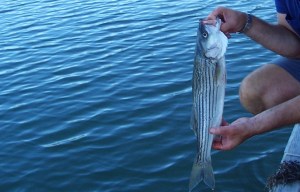 Pleased to note that one of my favorite stories in the collection has been excerpted at MidCurrent. In “Keepers,” an amateur sportsman vacationing on an Atlantic resort island leaves his young family behind to go fly-fishing at the edge of the ocean and has occasion to regret it. Read the story here.
Even better, order the complete collection from IndieBound, Amazon, or Barnes & Noble — or request it at your favorite local bookstore! (ISBN# 978-0997452877)
Two new articles on the writing craft
April 9, 2017 § Leave a comment
 “As a species, we’re ruled and dominated by our over-developed hominid imaginations. Setting is what propels us into the dream of story, because its lucidity — its sensory concreteness — activates our imaginations on a subconscious level, irresistibly, without our knowledge or permission.” — from “Research Notes: A Field Guide to Murder & Fly Fishing,” an illustrated meditation on place and the writing process at Necessary Fiction
“We read novels and stories for distraction, for entertainment, yet the best fiction also gives us something life itself cannot: direct exposure to the internal life of another human being. It is this unique backstage access that makes good fiction more immersive and emotionally gripping than any other narrative medium.” — from “What Are Writers For? A Fiction Writer’s Perspective,” at GrubWrites.
Vermont Public Radio Interview
April 7, 2017 § Leave a comment
 “What I was trying to do was first of all just to tell a good story.”
Really enjoyed my recent conversation with Vermont Public Radio’s Mitch Wertlieb! We discussed writing, fly fishing, avalanches, the Grateful Dead, and other topics related to my newly released short fiction collection, A Field Guide to Murder & Fly Fishing.
 Here’s a link to the podcast and transcript of the interview. Have a listen if you’re curious: the whole thing is just under seven minutes long. And here’s a link to the collection, which can be purchased at Amazon, B & N, or by request from your favorite local bookstore!
 Tim Weed